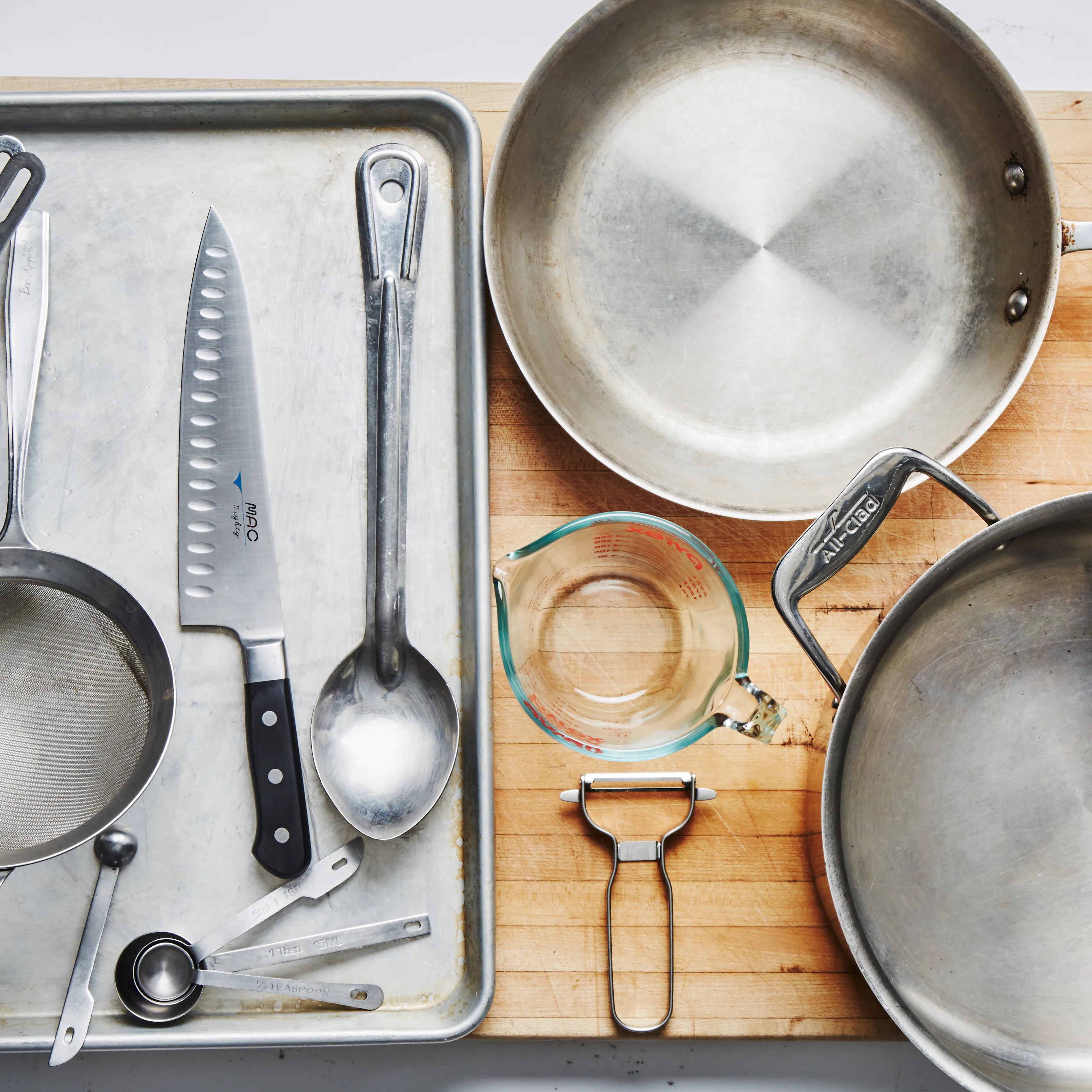
Every great cook starts with the right tools. Here’s your guide to the essentials — what to buy, why it matters, and how to get the most out of each one.
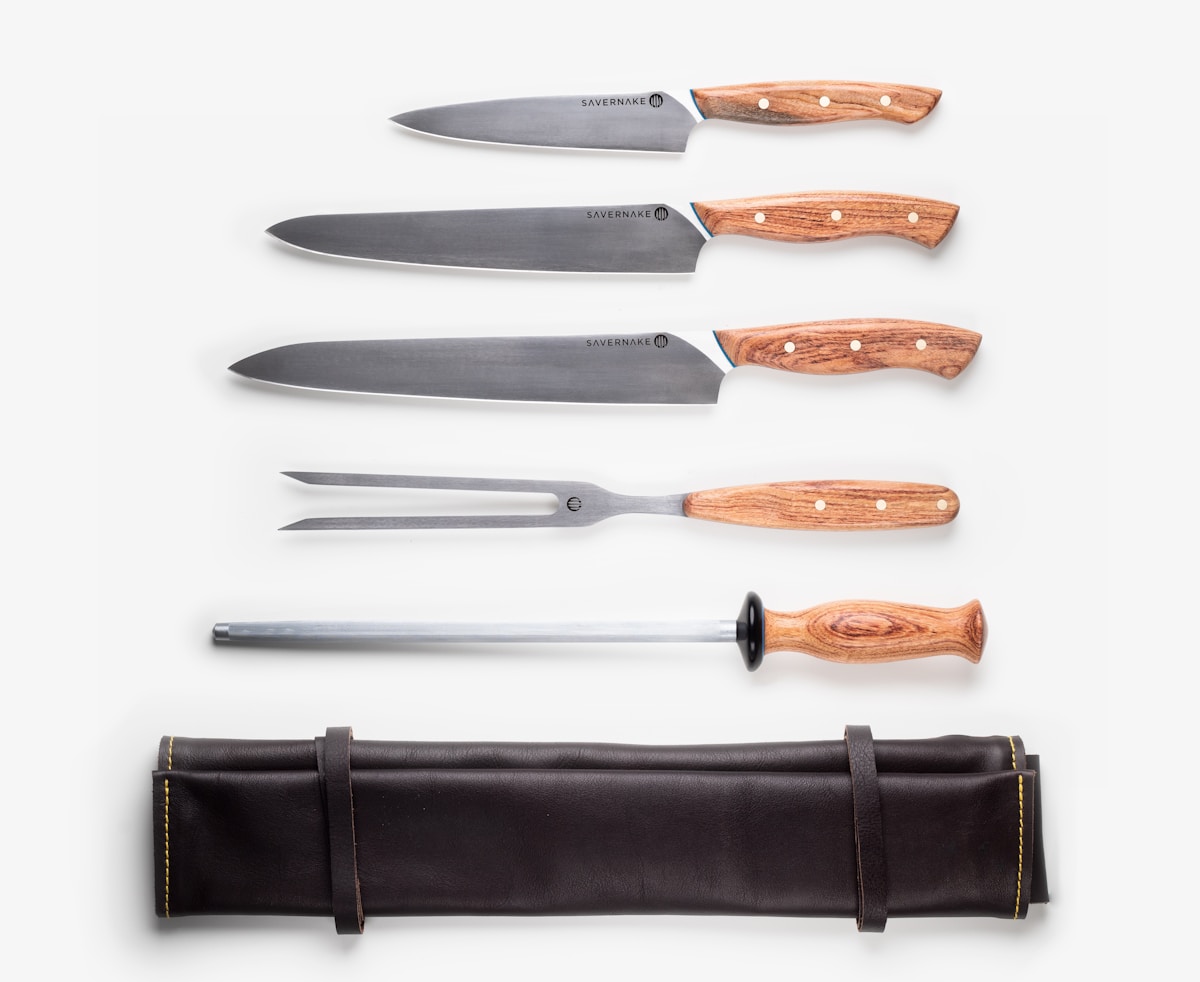
1. The Chef’s Knife
The single most important tool in your kitchen. A good 8-inch chef’s knife handles everything from mincing garlic to breaking down a whole chicken. Investing in a quality knife — and learning to use it properly — will transform the way you cook.
How To Use It
- Grip the blade between your thumb and index finger just above the handle — this is called a pinch grip and gives you maximum control.
- Use a rocking motion for chopping herbs and a push-cut for slicing vegetables.
- Always curl your fingertips inward to protect them while cutting.
Tips & Tricks
- Hone your knife before every use with a honing steel — it realigns the edge without removing metal.
- Sharpen 2–3 times a year depending on how often you cook.
- A sharp knife is safer than a dull one — it requires less force and is less likely to slip.
2. The Colander
More than just a pasta drainer, the colander is an essential multi-tasker. Use it to rinse produce, drain canned beans, steam vegetables, or wash rice. A sturdy stainless steel colander with a stable base is a kitchen workhorse you’ll reach for daily.
How To Use It
- Place it in the sink before draining boiling pasta — never carry a full pot of boiling water to a colander across the kitchen.
- Use it to rinse fruits and vegetables under cold running water before prep.
- Set it over a bowl to drain yogurt or ricotta overnight for a thicker, creamier result.
Tips & Tricks
- Choose one with feet or a stable ring base so it sits securely in your sink.
- Fine-mesh colanders double as sifters for flour, powdered sugar, and spices.
- Salt your pasta water generously — the colander drains it fast, so make it count while it’s in the pot.


3. The Mandoline
When precision slicing matters, nothing beats a mandoline. It produces paper-thin, perfectly uniform cuts that a knife simply can’t replicate consistently — essential for gratins, slaws, salads, and chips. Once you use one, you’ll wonder how you ever managed without it.
How To Use It
- Always use the hand guard provided — mandoline blades are razor sharp and unforgiving.
- Set the thickness dial to your desired cut before you start, and test with a slow first pass.
- Use long, smooth strokes and let the blade do the work — don’t press down hard.
Tips & Tricks
- Cut a flat side on round vegetables like potatoes first so they don’t roll while slicing.
- Wear a cut-resistant glove in addition to the hand guard for an extra layer of protection.
- Rinse immediately after use — dried starch and food residue make cleaning much harder and more dangerous.
Leave a Reply